Centers Health Care is Stronger Together
This summer Centers Health Care is Stronger Together
A reflection of our unity, our strength and our ties to the communities we serve.
We are committed to providing an empowering circle of care. Top healthcare professionals in every field play a critical role in our mission to deliver a patient-centered life cycle that makes us all stronger. Our leadership, experience and expertise in post-acute healthcare all lead to successful outcomes.
Danny Prero, Administrator at Williamsbridge Center, describes how he experiences the circle at his facility: “I’m a firm believer in working hard, working together, and paying it forward. My mission is to guide my team toward a common goal and outcome—improving the lives of all those who come through our doors in need of our care. I inspire my team to achieve success, and they inspire me by their great work.”
This summer, as you get to know why we are stronger together, you will also have the opportunity to learn something…and win something, including a Roku TV, a trip for 2, and more. All you have to do is learn the facts: Did you know that Centers Health Care partners with over 2,000 hospitals and health providers, that the average therapy department at Centers has over 140 years of combined experience, and each year we achieve over 22,000 successful rehabilitation stays? There is real strength—and some pretty cool prizes—in those numbers!
We are also recognizing our healthcare hero partners at regional hospitals, serving up complimentary ice cream or donuts to the staff at Ellis Hospital in Schenectady, Bassett Medical Center in Cooperstown, Saratoga Hospital in Saratoga Springs, Jacobi Medical Center in the Bronx, and NYU Langone Hospital in Brooklyn to name just a few. Watch our donut extravaganza in action, courtesy of Centers Health Care.
[embedyt] https://www.youtube.com/watch?v=Bd1EUsKY2u4[/embedyt]
The bottom line is: Centers Health Care is making a difference in people’s lives.
- John Armstrong was broken and immobilized by a motorcycle accident. Carthage Center put him back on his feet and sent him home stronger than ever.
- Cynthia Litt’s health was going downhill until she entered Troy Center. “They brought me back to life!” she exclaims.
- Carey Gordon had a debilitating stroke. Beth Abraham Center taught him how to walk, talk, and enjoy life again.
These are just three of the many examples from around Centers Health Care that remind us of the wonderful stories we can share because we are stronger together.
Last, but certainly not least, the campaign highlights inspiring true stories of patients and residents who have benefitted from the Centers Circle of Care, demonstrating the real-life power and success of the Stronger Together promise.
Did you enter for your chance to win?
Extraordinary Individuals: #CentersHeroes
A message from CEO, Kenny Rozenberg, to #CentersHeroes:
Our thanks—and our hearts—go out to you.
I’ve never been more proud of—or awed by—the Centers Health Care teams across our network and throughout our facilities. At this critical time, in the face of the COVID-19 pandemic, all of you—administrators, therapists, nurses and nurses aides, social workers, hospital liaisons, receptionists, recreational, food and cleaning staffs—have stood up and met the challenge head on. You are the best. You are the bravest. You are Centers Heroes!
Watch our #CentersHeroes in action.
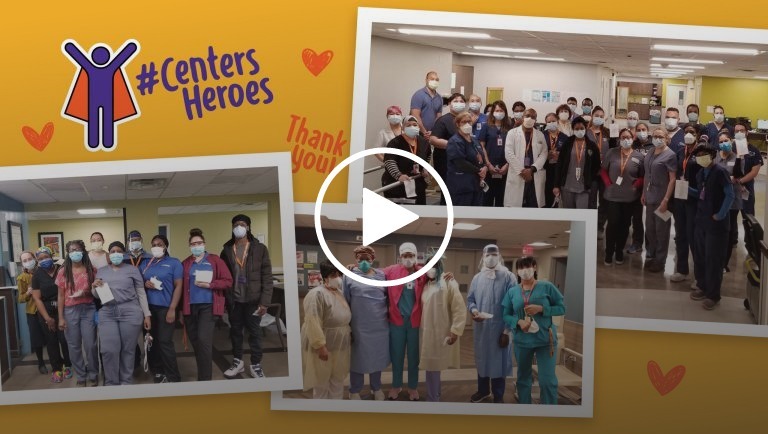
Every day, without fail, you demonstrate the courage to step up—and the commitment to safeguard the health and wellbeing of our patients, residents and your co-workers. The world is changing. You are not…because I’ve seen it with my own eyes: you have always been steadfast in your dedication and courage.
I want to highlight a #CentersHero, Shellan Robinson, LPN at Ellicott Center. “I love what I do. I can’t think of anything more rewarding than being a nurse: taking care of people in need, easing their pain, comforting and engaging them. In the last several months, with the arrival of COVID-19, we have experienced dramatic new challenges in our work. But one thing remains the same: I still love what I do.” Click here to read more
Shellan’s story is just one of many—stories of the unsung heroes throughout Centers Health Care. We honor you. We salute you. We thank you from the bottom of our hearts. You are our heroes.
Our partners at the Buffalo Sabres also recognize and salute our #CentersHeroes. Goaltender Carter Hutton, sends a shoutout to you all:
“On behalf of the Sabres, I want to say thank you to our friends at Centers Health Care. You show up every single day to help prevent Covid-19. Your support is great for the community. Thanks for keeping us safe.”
Watch the full video of Carter here
I know this is not easy—for you or your families. The pandemic may in fact be the greatest challenge you ever face. But you have proven by your every day actions—by your commitment and your compassion—that you are up to the challenge.
I want to join the Sabres in thanking every #CentersHero…as well as all healthcare workers and first responders on the frontline of the COVID-19 pandemic.
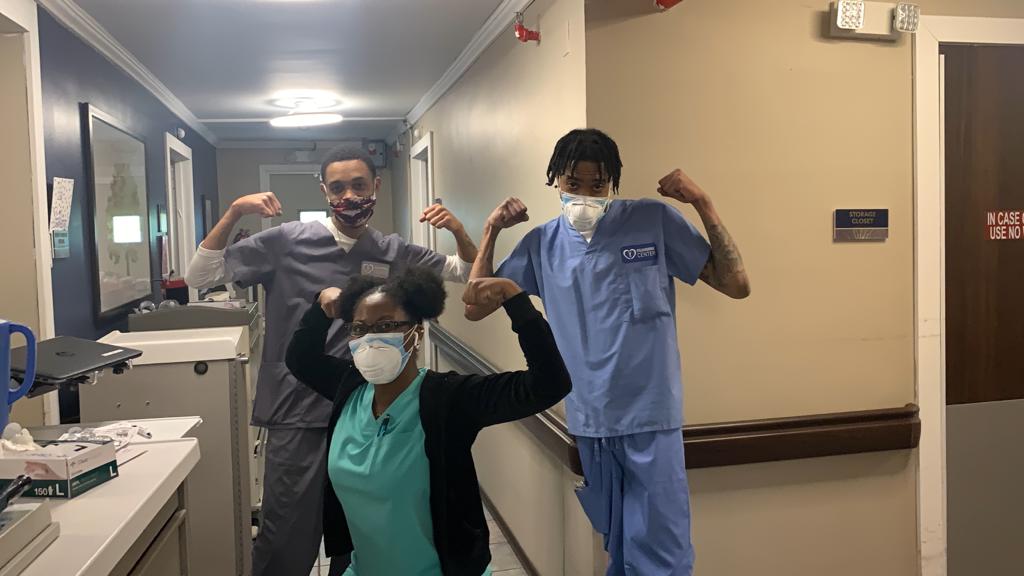
Special Perks for Special Healthcare Workers—Like You.
Take advantage of these special FREE resources now available to healthcare workers and first responders.
Companies across New York and across the country are stepping up to support health care workers who are on the frontlines of the fight against COVID-19. Please explore these resources. Thanks for your hard work. You deserve all the help you get!
Allbirds
Allbirds is donating shoes to the medical community. They’ve already given out $500,000 worth.
Email together@allbirds.com for your free pair of wool runners.
Krispy Kreme
Krispy Kreme is offering anyone in the medical community a dozen doughnuts, free of charge. Valid every Monday through May 11.
“Just go to a Krispy Kreme drive-thru and show us your employer badge. That’s it,” the company said. “Pick up some free dozens on the way to work for you and your colleagues, or maybe a free dozen on your way home to family after a long shift.”
Sweetgreen
Sweetgreen is delivering free salads and bowls to hospital workers.
Hertz Car Rentals
Hertz is offering NYC healthcare workers a free rental car, up to 1 month!
Starbucks Coffee
A free tall hot or iced brewed coffee to anyone that identifies themselves as a COVID-19 front line responder through May 3rd.
Uber Eats
Uber Eats has pledged to give 300,000 free meals to first responders and health care workers.
Four Seasons Hotel
The Four Seasons Hotel on 57th Street will provide FREE lodging to doctors, nurses & medical personnel currently working to respond to the pandemic.
The hotel, like many, is closed due to COVID-19 until 4/15. But healthcare workers can call the hotel at 212-758-5700 to book a free room.
Crocs Shoes
Get a free pair of crocs to help you, while you help us alot.
AirBnb
Providing health care professionals, relief workers and first responders free or subsidized housing.
Childcare
Westchester Childcare
All school districts in Westchester County are now providing childcare for children ages 5 to 12 for healthcare workers and first responders with no other childcare options.
New York City Childcare
Regional Enrichment Centers—places where the children of front-line workers can be safely cared for while their parents continue to serve the city in this time of need.
Long Island Childcare
Emergency childcare is available for residents of Nassau and Suffolk County.
For more special perks and discounts, click here.
How to use Facetime to talk to friends and loves ones
How to use Facetime to talk to friends and loves ones
Available to iPhone and iPad users
- In the Facetime app, tap the plus button and type the person’s phone number or email address.
- Tap the number or address, then tap Audio or Video.
- If you have the person’s phone number or email address saved in your contacts, you can start typing their name and tap the name when it appears.
Once you have made the call, the next time you open the app, their name will appear when you open the app. Simply tap on their name.
How to use WhatsApp to talk to your loved ones
How to use Whatsapp to talk to your loved ones
Simple:
- Install Whatsapp on your phone.
- Tap on Whatsapp.
- Tap on the contact you want to call.
- Tap on the movie camera icon.
- You’re on!
How to use Skype to talk to friends and loved ones
How to use Skype to talk to friends and loved ones.
- Check for a webcam.Be sure your computer has a webcam. On most laptops, the webcam will look like a small hole in the top border of the screen.
- Install Skype.Depending on whether or not you have a Mac or a PC, the download link is different.
- For Windows users:Go to this link: http://www.skype.com/en/download-skype/skype-for-computer/. Click on the green button that says, “Get Skype for Windows Desktop.”
- For Mac users:Go to this link: http://www.skype.com/en/download-skype/skype-for-mac/. Click on the green button that says, “Get Skype for Mac.”
- Follow installer instructions.The Skype download should start automatically and the installer will guide you through how to install the program.
- Open Skype.After the program is finished installing, open up Skype. If you have trouble finding the program, follow these instructions for Mac or PC.
- For Windows users:Press your Windows key (left of Alt key), type “Skype” and press ↵ Enter.
- For Mac users:Open up Finder, search for “Skype,” then click on the program
- Click on a contact.In the left side of your screen, you will see a list of contacts if you have added any. Click on the name to open up a conversation with that person.
- If you haven’t added any contacts, you will first have to add at least one. Ask for a friend’s Skype ID, click Contacts in the upper left of the window, click Add Contact in the dropdown menu, then type your friend’s Skype ID.
- Start a video call.To start a video call, you must first be in a conversation with a contact. The instructions are slightly different for Mac and PC users.
- For Windows users:Click on the icon in the upper right corner of the window that looks like a video camera. It should be a blue circle with a white video camera inside.
- For Mac users:Click on the icon in the upper right corner of the window that looks like a video camera. It should be a green circle with a white video camera inside. Depending on your version of Skype, the icon may instead simply say, “Video Call.”
- You may be asked for permission for Skype to use your video camera, click “Allow” if you are comfortable with Skype having access to your camera.
- End the call when done.End the call by pressing the red button on the bottom of the video call window. The icon looks like a red circle with a white phone inside of the circle.
- You may need to move your cursor around the inside of the video call window to reveal the hang-up button.
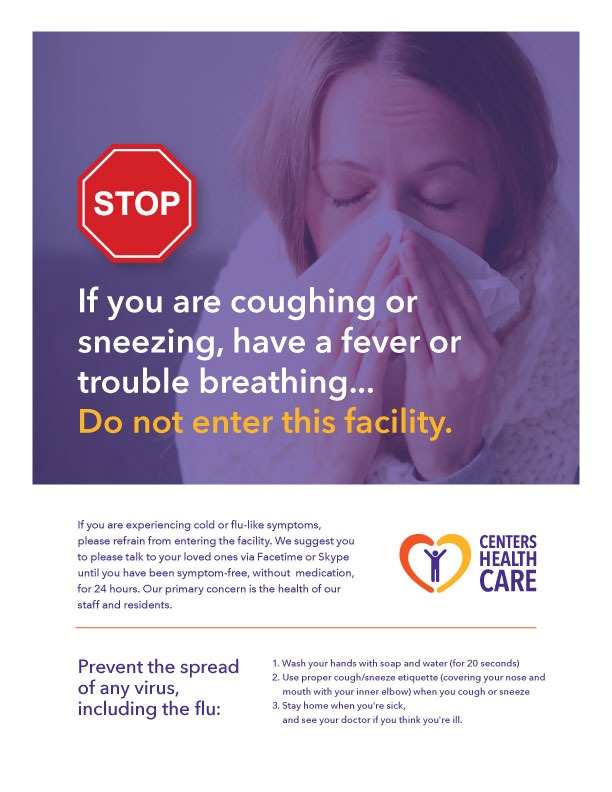
Coronavirus Notice:
Onondaga Center for Rehabilitation and Nursing on Four Medications That Can Affect Your Sleep
Study: A Quiet Brain Is a Key to Longevity; Onondaga Center for Rehabilitation and Nursing with 4 Ways to Succeed
Researchers from Harvard Medical School found that a “quiet brain” could extend your life. A quiet brain is described as using less neural activity, which uses less overall energy from the body.
The study, published in the medical journal Nature, was conducted by investigating brain tissue of people who died between the ages of 60 and 100. Researchers found that people who lived longer had signs of less neural activity based on the levels of a specific protein.
So, how does one keep their brain sharp while attempting to keep it quiet at the same time? Onondaga Center for Rehabilitation and Nursing would like to share four tips with you.
- Be More Mindful of Your Body
Try to meditate for at least five to 10 minutes each day and be mindful of parts of the body where you are holding tension. Training your body to sense the presence of tension will help you be able to manage and eliminate it even during times that you’re not actively meditating.
- Be Present in the Moment
Your mind might be moving too fast for the rest of your body. Are you interrupting people before they’re done speaking? Is your mind distracted at the dinner table by everything else you have to do? Put those thoughts aside and be actively present in any situation that you are in.
- Schedule Free Time
You fill your calendar with meetings, appointments, and other obligations, but do you schedule time for yourself? Make yourself take a break by working some down-time into your schedule or routine.
- Watch What You Eat
Your diet has more of an effect on your brain than you might realize. Avoid eating empty calories while doing sedentary activities like watching television.
Onondaga Center for Rehabilitation and Nursing on How Cancer Survivors Can Overcome Insomnia
A little-known fact for those who have not been affected by cancer is that, many times, survivors face chronic insomnia for years after they finish treatment. The Dana-Farber Cancer Institute believes this number to be as high as 30 percent of all cancer survivors.
A new study in the journal Cancer shows that cognitive behavioral therapy (CBT) can be a very effective way for cancer survivors to again get restful sleep.
What is Cognitive Behavioral Therapy?
According to the American Psychological Association, CBT is a form of psychological treatment that involves efforts to change thinking and behavioral patterns. Ways it can accomplish this include:
- Facing one’s fears instead of avoiding them.
- Using role playing to prepare for potentially problematic interactions with others.
- Learning to calm one’s mind and relax the body.
How Did CBT Work to Help Symptoms of Insomnia in Cancer Survivors?
The study began with 51 cancer survivors who had moderate to severe insomnia.
That group went through what was called a single-session sleep education program. Incredibly, 45 percent of those in the study said it cured their insomnia.
Others continued on to a three-part program that included CBT. After the three sessions, 79 percent of those who went through them said that they resolved their insomnia issues.
Why Do Cancer Patients Develop Insomnia?
Researchers believe that it’s due to the physical and psychological side-effects of treatment methods like chemotherapy and radiation. Besides being hard on the body, a cancer diagnosis can wreak havoc on the mind.
If you or someone you know is having this issue, you can bring it up with your oncologist. You can also do some simple things like avoiding caffeine and alcohol before bedtime, maintaining regular exercise, and napping for no more than 20 minutes at a time during the day. These are all ways to help you get to sleep at night.